

ÔME HOUSEKEEPING
August 15, 2026 at 10:18:31 PM
Citric Acid: The Natural and Versatile Descaler
Share -
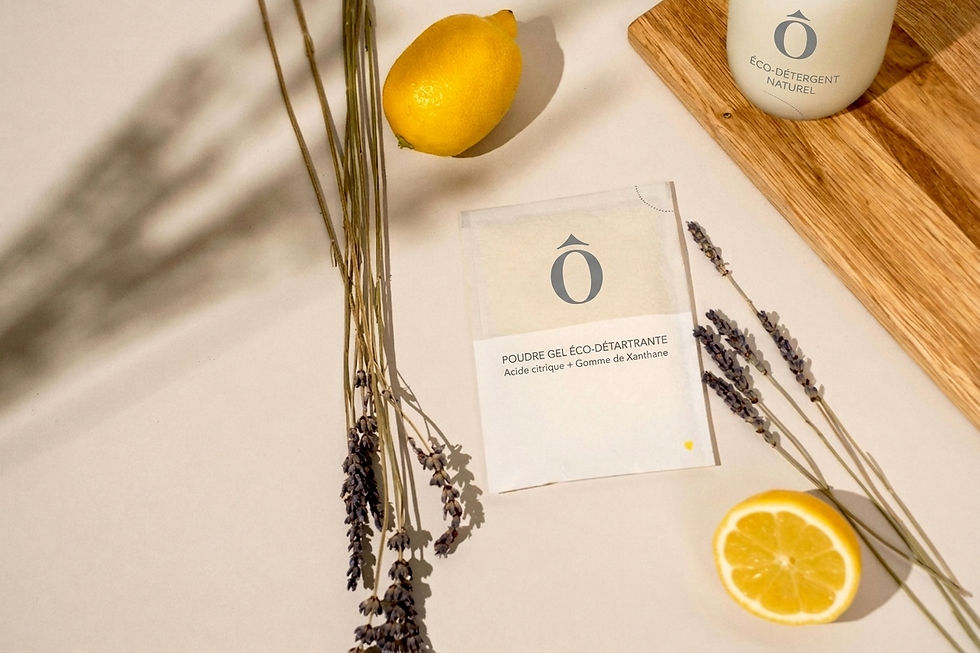
Limescale is public enemy number one for most surfaces and household appliances. Citric acid is its best natural answer: an acid of plant origin (extracted from lemon and other citrus fruits), with no unpleasant odor, non-toxic, biodegradable, and remarkably effective against limescale deposits.
Why citric acid descales so well
Citric acid is a weak acid of natural origin. It acts by dissolving calcium carbonate - in other words limescale - through a chemical reaction. Unlike white vinegar, it has practically no odor, which makes it much more pleasant to use in an enclosed room like the bathroom or toilet.
It is found as a powder in organic stores, drugstores, or online. It's very economical: a few grams are enough to treat a surface.
No odor, no toxicity, remarkably effective on limescale. Citric acid is the natural descaler we should all have in our cupboards.
What can be descaled with citric acid
FAUCETS AND MIXER TAPS - Apply a concentrated solution (2 to 3 tablespoons per 500 ml of hot water) with a cloth or sponge. Let sit for 15 to 30 minutes, scrub if needed, rinse.
SHOWERHEAD - Unscrew and soak in a solution for 30 to 60 minutes. Limescale deposits blocking the holes dissolve without scrubbing.
COFFEE MAKER AND KETTLE - Fill with a solution (1 tablespoon per 500 ml of water), let sit for 30 minutes or run a full cycle. Rinse twice with clean water.
WASHING MACHINE - Pour 100 to 150 g of powder directly into the drum (not the detergent drawer). Run an empty cycle at 60°C.
IRON - Fill the tank with a light solution, heat and empty onto a cloth. Rinse with clean water.
TOILET - Pour a concentrated solution into the bowl. Let sit for 1 hour (or overnight for very old deposits), brush, and flush.
SINKS AND SHOWER TRAYS - Apply as a paste, let sit for 20 to 30 minutes, scrub with a non-abrasive sponge, and rinse.
Reference dosages
Light solution (maintenance): 1 teaspoon per 500 ml of lukewarm water.
Standard solution (routine descaling): 1 tablespoon per 500 ml of hot water.
Concentrated solution (stubborn deposits): 2 to 3 tablespoons per 500 ml of hot water.
Paste (targeted areas): mix the powder with a few drops of water to obtain a thick consistency.
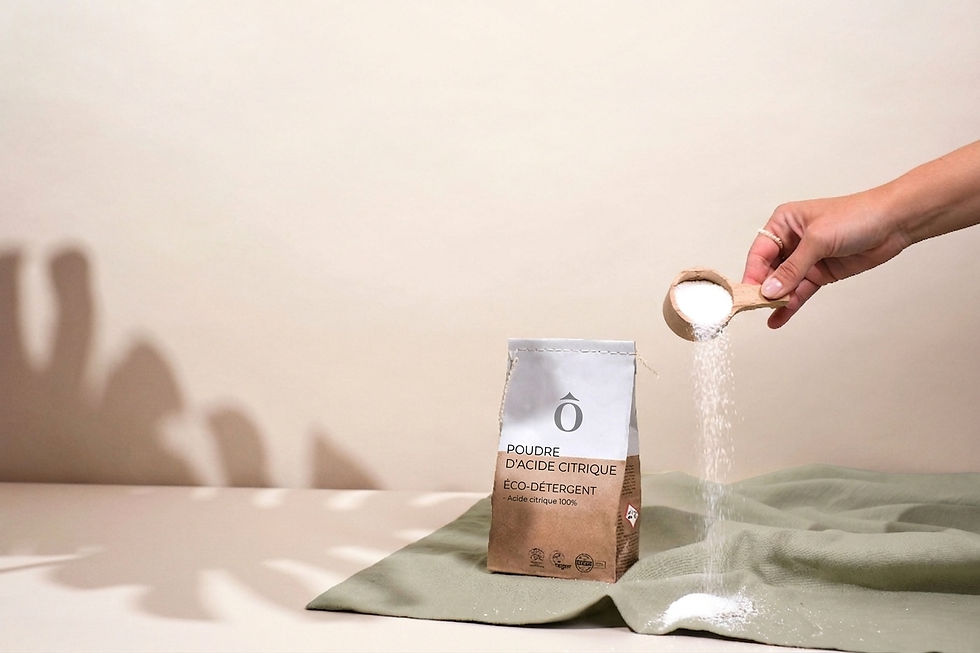
The older the limescale deposit, the higher the concentration and exposure time should be. Tip: heating the water before dissolving the acid improves effectiveness, especially on old deposits.
Tip
For even more effective descaling, heat the water before dissolving the citric acid. Heat accelerates the chemical reaction and improves the result, especially on old deposits.
Conclusion
Citric acid is one of the rare natural products capable of fully replacing commercial chemical descalers - on surfaces, machines, and sanitary equipment. Versatile, inexpensive, and safe for health, it fully deserves its place in your cleaning arsenal.